I got my first teaching job in 1984, working at a large boy's secondary school in El Obeid, Sudan. This experience made it very clear to me that there's a lot more to teaching English than just being able to speak the language!
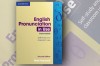
I wrote English Pronunciation in Use in the years leading up to its first publication in 2003. I'd already published Pronunciation Games, but this was a more comprehensive work.
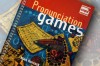
Pronunciation Games was my first book. I had been preparing pronunciation materials at the Cultura Inglesa in Copacabana, and colleagues suggested that I take the ideas to a publisher. CUP took it on, and made it the first in their photocopiable series the Copy Collection.
I wrote New Ways to Go in collaboration with Penny Ur, and for the first two levels, Ramon Ribé. My involvement began as author of the Workbooks, and then expanded to co-author of the Students' Books.
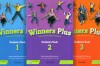
I wrote Winners in collaboration with Cathy Lawday. It was a series of three coursebooks specifically written for the Polish upper-primary sector. After the success of the first edition, it was reprinted a few years later under the name Winners Plus, accompanied by interactive whiteboard software.
English Result was first conceived in 2002, five years before the first book in the series saw the light of day, and nearly a decade before the series was complete. We set to work at the suggestion from OUP, and decided to write the adult coursebook that we ourselves would want to use.
We see a waiter's responses to a complaining customer. The waiter can make the sentence mean something completely different according to the word he/she stresses... More pronunciation ideas? See this article.
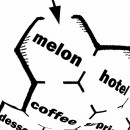
Students find a path from top left to bottom right. They may only pass through a hexagon if the word has stress on the first syllable. Notice that all the words are 2-syllable nouns. Some of them may be cognates in your students' L1, but the stress may be different! More pronunciation ideas?
Sometimes, you plan your lesson backwards. You find something you really want to use in class and so you plan your lesson around it, even though it doesn't really fit in with where you're up to on the curriculum. Maybe it's a song. Maybe it's a great text. Maybe a video clip off the internet, or some new technological innovation.
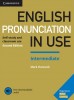
In 2017 English Pronunciation in use got a new look. The new cover design comes along with a new approach to audio - instead of being on a set of four audio CDs and a CD-ROM, the audio is now a free online download. This makes the whole package much more affordable and is published alongside the 2012 second edition of this best-selling pronunciation title, already in full colour and with a new section on understanding fast, authentic speech.
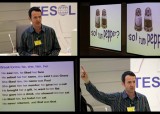
There is a video of this lecture recorded at TESOL Spain, Bilbao below. Pronunciation is just as important for listening as for speaking. In this workshop, we will see how to help learners to understand authentic English by focusing on pronunciation. Specifically, we will look at features of connected speech, intonation, and accent.