I got my first teaching job in 1984, working at a large boy's secondary school in El Obeid, Sudan. This experience made it very clear to me that there's a lot more to teaching English than just being able to speak the language!
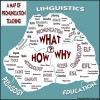
Spoiler alert! Read no further if you´re going to attend this talk and rather like surprises! In this talk, we will take a playful approach to the teaching of pronunciation. We will see how the playfulness may lie one the one hand in the materials we use, as in the case of word-play, rhymes, chants and so on, and on the other hand, in the tasks we set up, as in the case of games and puzzles.
Pictures are like silent stories. Silent because they are non-verbal. Stories, because they are pregnant with content to talk about. For these two reasons alone, they are extremely useful in English language teaching. In this talk, we explain these and more advantages of pictures, as well as demonstrating different activity types for use in the classroom.
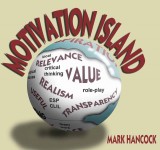
You have to pay attention to learn. So what kinds of classroom materials and activities motivate learners to pay attention? In this presentation, we will see motivation theory in the form of a map of an island with four main regions – subject, aspiration, learning and classroom. We will explore these regions and try out some classroom activities which illustrate them.
Songs are a particularly useful resource for ELT. They have language, motivational appeal and great mnemonic power. In this presentation, we will look at different ways in which we can unlock their potential. We will try out a series of activities to use before, during and after the song.
Sugata Mitra argued with evangelical flourish that, given the right resources, children will learn without schooling. He said that the right resource has now come into existence and is potentially available to every child: the internet. To support this argument, Mitra described what have become known as “the hole in the wall” experiments.
Kathleen Graves’s title contained the paradox that in teaching, you sometimes have to be less efficient to be more efficient. In a time in which testing and accountability have become paramount, in an attempt to cut out the dead wood in education, we have neglected the learner and a broader vision of what learning is for.
In this plenary, David Graddol delved into the murky world of the English teaching business, where the imperative is firmly profit over people. He asks, ‘Who benefits from English teaching?’, and answers, ‘Follow the money!’. On that basis, it’s clearly not teachers and learners who benefit.